
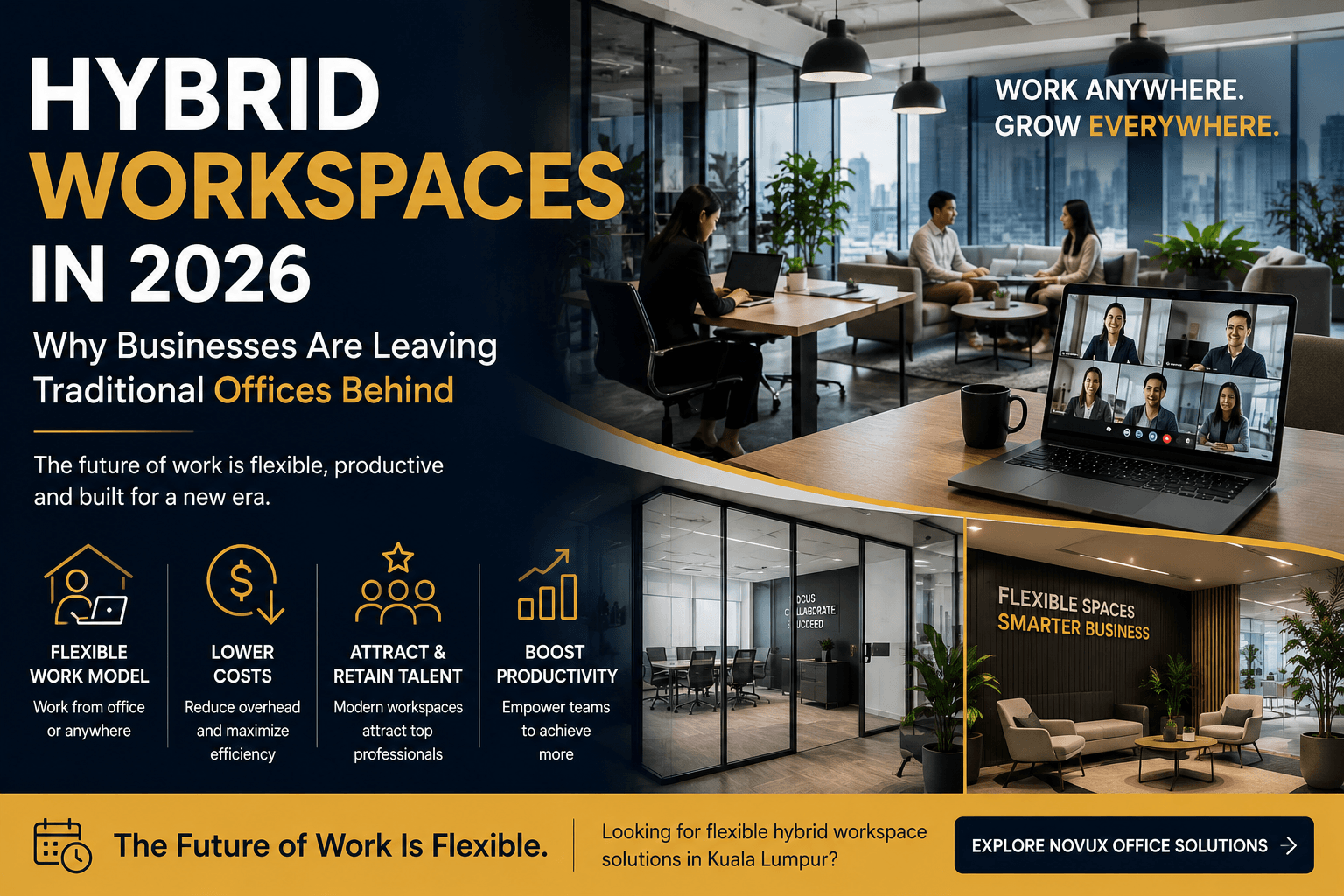
Hybrid Workspaces in 2026: Why Businesses Are Leaving Traditional Offices Behind
The future of work is no longer tied to rigid office structures. Businesses across Malaysia and globally are shifting toward hybrid workspace models that combine flexibility, productivity, and operational efficiency.
Discover why hybrid workspaces are becoming the preferred office strategy in 2026 and how companies are adapting to the future of flexible work environments.
The workplace landscape has changed dramatically over the past several years. Traditional office environments that once required employees to work full-time in physical spaces are being replaced by more flexible and adaptive hybrid workplace strategies.
In 2026, businesses are prioritizing flexibility, employee satisfaction, operational efficiency, and scalable office solutions. Hybrid workspaces have emerged as one of the most effective ways for companies to balance remote work with collaborative in-person environments.
What Is a Hybrid Workspace?
A hybrid workspace is a modern office model that combines remote work flexibility with access to physical office environments.
Instead of requiring employees to work exclusively from a centralized office, hybrid workspace models allow teams to:
- Work remotely when needed
- Use shared office spaces
- Collaborate in physical meeting environments
- Access flexible workspace facilities
- Scale office usage based on operational needs
Why Hybrid Workspaces Are Growing Rapidly
Businesses are increasingly adopting hybrid office solutions to reduce costs, improve flexibility, and support modern workforce expectations in a rapidly evolving digital economy.
Why Hybrid Work Is Becoming the New Standard
Hybrid work models are becoming the preferred workplace strategy because they align with both business efficiency and employee expectations.
Employee Flexibility
Employees increasingly value flexibility, remote work access, and improved work-life balance.
Operational Efficiency
Businesses reduce unnecessary office expenses while improving workspace utilization.
Talent Retention
Flexible workplace strategies help companies attract and retain high-performing talent.
Employee Flexibility & Work-Life Balance
Modern professionals increasingly prioritize flexibility when choosing employers. Hybrid workspaces provide employees with greater control over their schedules while reducing commuting stress and improving overall work-life balance.
Reduced Office Overhead Costs
Traditional office leases often involve significant long-term financial commitments including rent, utilities, maintenance, furniture, and operational expenses.
Hybrid office solutions help businesses reduce:
- Long-term lease commitments
- Utility expenses
- Unused office space costs
- Infrastructure overhead
- Maintenance expenditures
Better Talent Attraction & Retention
Companies offering hybrid work models often gain a competitive advantage in recruitment by appealing to modern workforce expectations.
Flexible work environments improve:
- Employee satisfaction
- Talent retention
- Company culture
- Workplace morale
Increased Productivity Through Flexibility
Many businesses report improved productivity after implementing hybrid workplace strategies. Employees often perform more efficiently when given the flexibility to work in environments that best suit their tasks and workflows.
Hybrid Workspace vs Traditional Office
Traditional office models typically rely on fixed long-term leases and full-time physical occupancy.
Hybrid workspace solutions offer:
- Flexible office access
- Scalable workspace options
- Lower operational costs
- Remote collaboration support
- Improved business agility
Traditional Office
Fixed contracts, higher operational costs, and limited workplace flexibility.
Hybrid Workspace
Flexible office usage, scalable workspaces, lower costs, and remote-friendly collaboration.
Industries Benefiting Most from Hybrid Offices
Several industries are rapidly adopting hybrid office models due to their flexibility and operational advantages.
- Technology companies
- Digital agencies
- Marketing firms
- Consulting businesses
- Remote-first startups
- Freelance teams
- Creative industries
Businesses operating in digital and knowledge-based sectors benefit significantly from flexible workspace solutions because their operations rely heavily on collaboration, communication, and remote accessibility.
How Businesses Can Transition to Hybrid Work Successfully
Successfully implementing a hybrid workplace strategy requires careful planning, communication, and operational alignment.
Define Clear Hybrid Work Policies
Businesses should establish clear expectations regarding remote work schedules, office access, communication standards, and performance management.
Invest in Digital Collaboration Tools
Hybrid teams require strong communication infrastructure including:
- Cloud collaboration platforms
- Video conferencing tools
- Project management systems
- Remote communication software
Choose Flexible Workspace Providers
Businesses should partner with workspace providers offering scalable office solutions, meeting rooms, coworking access, and hybrid office support.
Prioritize Employee Experience
Successful hybrid workplace strategies focus on employee satisfaction, workplace culture, flexibility, and collaboration.
Recommended Hybrid Workplace Priorities
- Flexible office access
- Scalable workspace solutions
- Digital collaboration infrastructure
- Employee-focused workplace policies
- Efficient meeting environments
Frequently Asked Questions
What is a hybrid workspace?
A hybrid workspace combines remote work flexibility with physical office access, allowing businesses to create more adaptable and scalable workplace environments.
Why are businesses moving toward hybrid offices?
Businesses are adopting hybrid offices to reduce operational costs, improve employee satisfaction, increase flexibility, and attract modern talent.
Which industries benefit most from hybrid workspaces?
Technology companies, startups, agencies, consultants, and remote-first businesses benefit significantly from hybrid workspace models.
The Future of Work Is Flexible
Businesses that embrace hybrid workspace strategies gain greater flexibility, operational efficiency, and workforce satisfaction in the modern digital economy.
Looking for flexible hybrid workspace solutions in Kuala Lumpur? Explore Novux office solutions designed for the future of work.

Leave A Comment